Industrial Parts Cleaning

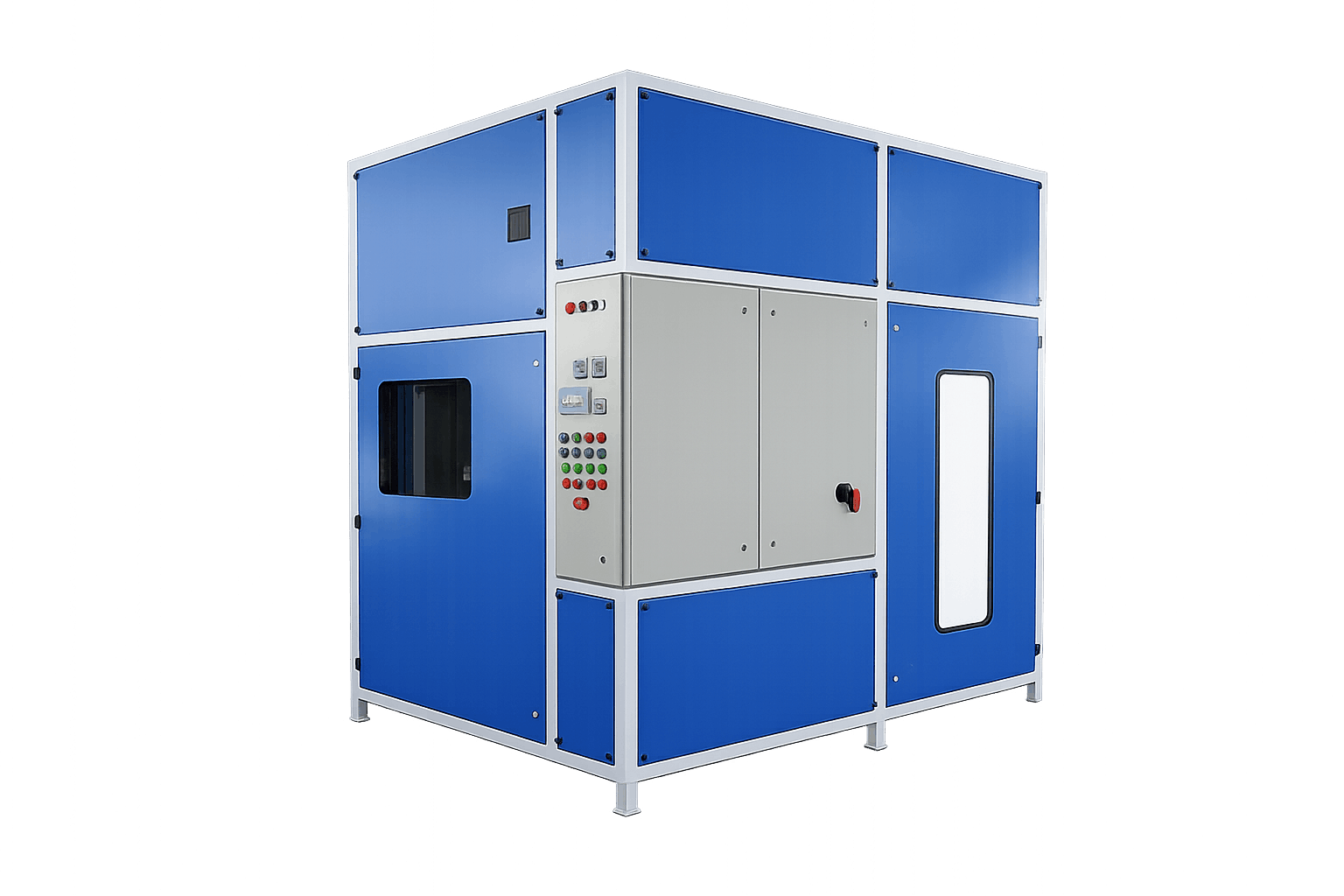
Single Chamber Multi Process Cleaning Machines

Compact cleaning systems combining spray wash, immersion or flood wash, ultrasonic cleaning and drying cycles inside one controlled chamber.

Home Industrial Parts Cleaning Single Chamber Multi Process

Multiple cleaning actions inside one compact system

Single chamber multi process cleaning machines are designed for applications where multiple cleaning stages are required but available floor space is limited. The same chamber can be configured to perform spray washing, immersion or flood washing, ultrasonic cleaning and drying according to the component requirement.

These systems are useful for precision parts, hydraulic components, machined parts and components with complex geometry where one cleaning method alone may not provide the required cleanliness result.

  • Compact single-chamber footprint
  • Spray wash cycle support
  • Immersion or flood wash option
  • Ultrasonic cleaning cycle support
  • Vacuum drying option on request
  • PLC-based process sequence control
Single chamber multi process cleaning machine

One Chamber. Multiple Cleaning Cycles.

A compact solution where wash, ultrasonic action, rinse and drying can be organised in one enclosed system.

Cycle 01

Spray Wash

Cycle 02

Flood / Immersion Wash

Cycle 03

Ultrasonic Cleaning

Cycle 04

Vacuum Drying

System Benefits

Why Choose a Single Chamber Multi Process System?

This type of system is useful when components need multiple cleaning actions but the production layout requires a compact and controlled machine.

Compact Layout

Multiple cleaning stages can be arranged inside one chamber, reducing machine footprint and floor-space requirement.

Better Degreasing

Spray and immersion cycles help remove oil, coolant, grease and loose surface contamination from parts.

Deep Cleaning

Ultrasonic action supports cleaning of cavities, holes, grooves and areas difficult to reach through spray alone.

Controlled Process

PLC-based cycle control helps manage process time, temperature, spray, ultrasonic action and drying sequence.

How the Single Chamber Cleaning Cycle Works

Components are loaded into the chamber in a basket, fixture or suitable holding arrangement. The machine then runs the selected sequence such as spray wash, flood wash, ultrasonic cleaning, rinse and drying. The sequence can be adjusted according to the part and cleanliness target.

Step 01

Load Components

Step 02

Wash / Flood / Ultrasonic Cycle

Step 03

Rinse & Drying Process

Step 04

Unload Clean Parts

Applications

Where Single Chamber Multi Process Machines Are Useful

These machines are suitable for parts requiring a combination of surface cleaning, cavity cleaning, degreasing and drying in a compact machine layout.

Component Type Cleaning Need Suggested Process
Hydraulic Components Oil, chips and internal passage cleaning Spray wash + ultrasonic + drying
Precision Machined Parts Coolant, grease and fine particle removal Flood wash + ultrasonic + rinse
Valve Bodies & Manifolds Cleaning of cavities, holes and oil passages Spray wash + ultrasonic + vacuum drying
Automotive Components Degreasing and particle removal before assembly Spray wash + rinse + hot air drying
Bearing & Transmission Parts Oil removal and precision cleaning Immersion wash + ultrasonic cleaning
Aerospace Precision Parts Controlled cleanliness and careful handling Custom multistage single-chamber process
Note: Final cycle selection, spray pressure, ultrasonic frequency, temperature, drying type, filtration and handling arrangement should be decided after component trial.
Selection Support

What Should Be Checked Before Selecting This Machine?

A single chamber multi process system should be selected after understanding the part design, contamination level, required cleanliness and drying requirement.

Part Geometry

Holes, cavities, blind passages and part size decide spray coverage, ultrasonic requirement and drying method.

Contamination Type

Oil, grease, chips, fine dust, polishing residue or coolant require different wash methods and chemical selection.

Batch Size

Component quantity, basket size, loading method and cycle time affect the final chamber size and machine layout.

Dryness Requirement

Hot air drying, blow-off or vacuum drying should be selected based on part geometry and final process need.

Need Compact Multi-Process Cleaning?

Find the Right Single Chamber Cleaning System

Share your component details, contamination type, production quantity and required cleanliness level. Vibrotech will help you select the right spray, flood wash, ultrasonic and drying sequence.